
Limewash vs. Paint: Cost Differences Explained
When transitioning from standard latex paint to an artisanal limewash finish, you aren't just changing the color; you are changing the entire scope of work. In high-cost-of-living areas like North Jersey, where professional labor rates for 2026 typically range between $50 and $80 per hour, the difference in total project cost is significant.
Here is a breakdown of why limewashing a bedroom costs more than double a standard paint job, including the mandatory preparation and finishing steps.
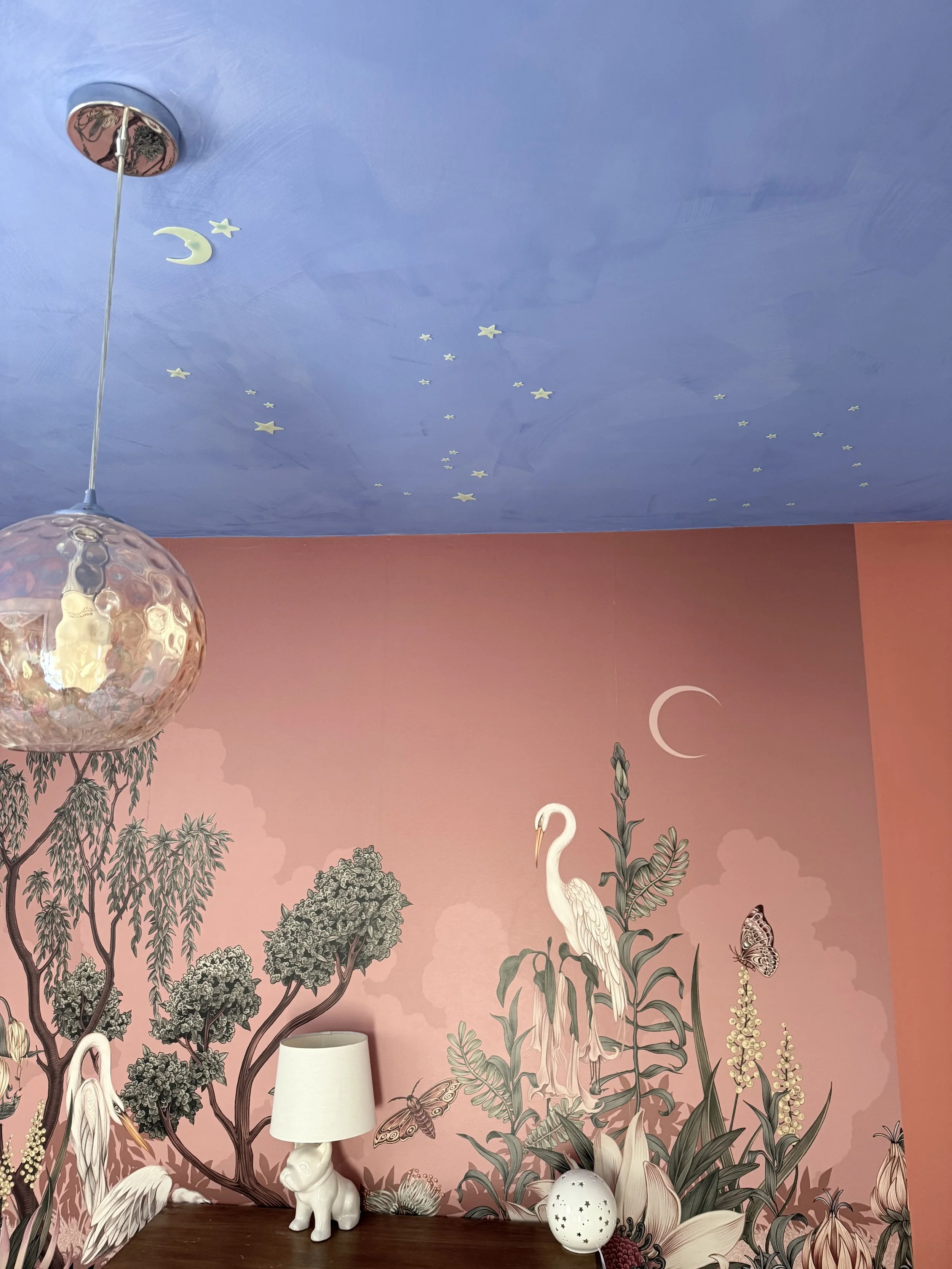
Limewashing ceiling creates interesting effect, but is more labor-intensive than painting.
1. The Chemistry of Preparation
Standard paint is a film that sits on a surface. Limewash is a mineral that must bond to it. This requires a specific, labor-heavy preparation phase.
The Mineral Primer Mandate: Most modern walls are covered in latex paint. Limewash cannot bond to latex. You must first apply a specialized mineral primer (often containing quartz or sand) to create a "bridge" for the lime. This adds an entire cycle of application and drying time.
Deglossing Trim and Doors: If you are limewashing previously painted doors or trim, deglossisng is non-negotiable. High-gloss paints repel water-based minerals. You must scuff-sand (150–220 grit) or use a chemical deglosser to create "tooth." Skipping this step results in the finish peeling off in sheets later.
2. Artistic Application vs. Mechanical Speed
Standard paint is applied with rollers and sprayers designed for speed. Limewash is applied by hand, which is inherently slower.
The Block Brush: To get the signature "cloud-like" effect, an installer must use a heavy block brush in a cross-hatch or "X" pattern. This takes roughly 3 to 4 times longer per square foot than rolling.
Wet-Edge Complexity: Unlike latex, you cannot stop mid-wall with limewash. To avoid "lap marks" (visible dark lines), the installer must maintain a wet edge for the entire wall or ceiling. This often requires two painters working in tandem on larger surfaces.
Layering for Depth: While modern paint covers in 1–2 coats, limewash typically requires 2–3 very thin, translucent coats to achieve the desired texture and opacity.
3. Mandatory Sealing for Durability
Raw limewash is porous and "chalky." While some leave it raw on walls, it is too fragile for high-touch areas like doors and trim.
The Clear Coat/Wax Stage: To protect the finish from fingerprints and oils, a specialty breathable matte sealer or hand-rubbed wax must be applied. This is a final, separate labor stage that standard eggshell or satin paints simply don't require.
Comparative Cost Table: Standard vs. Limewash
Calculated for a standard 12' x 12' bedroom using a professional labor rate of $60/hour.
| Surface | Standard Paint (Hours) | Standard Cost (Labor) | Limewash (Hours) | Limewash Cost (Labor) |
|---|---|---|---|---|
| Walls | 5 hrs | $300 | 13 hrs | $780 |
| Ceiling | 2 hrs | $120 | 5 hrs | $300 |
| Trim & Doors | 4 hrs | $240 | 8 hrs | $480 |
| Total Labor | 11 hrs | $660 | 26 hrs | $1,560 |
Note: These costs represent labor only. Limewash materials and specialized mineral primers generally cost 20–40% more than premium latex paints.
Summary: The "Artisanal Tax"
The price difference reflects the move from a mechanical trade to a decorative art form. Limewash is more expensive because it requires:
More Prep: Deglossing and mineral priming.
More Layers: 3 coats vs. 2 coats.
More Skill: Hand-brushed aesthetics that can't be rushed or automated.